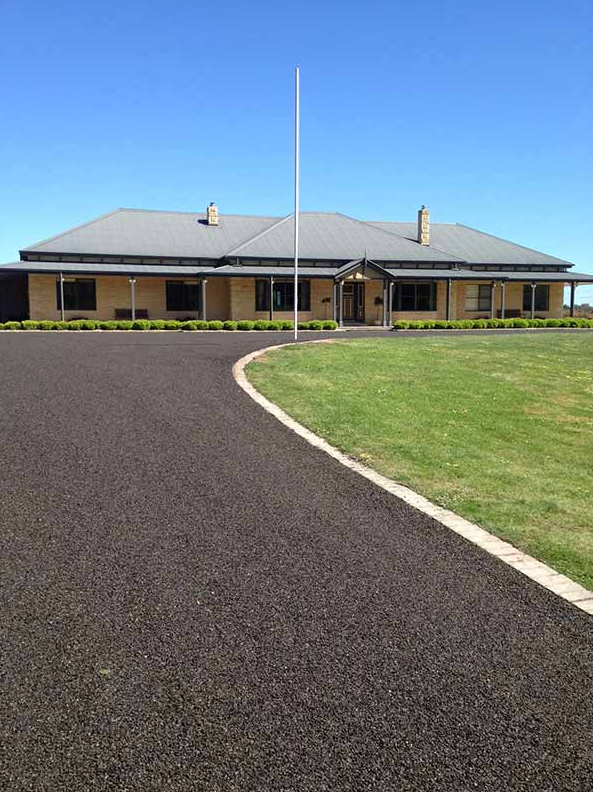
A rough or uneven access area can create daily challenges for property owners, businesses and vehicle operators. Loose gravel, potholes, deep wheel ruts and poor drainage can make entering and leaving a property uncomfortable, particularly when the surface is used frequently or by heavier vehicles.
Over time, these problems can become more pronounced as traffic continues to disturb the ground. What begins as a few uneven patches may eventually develop into an access area that requires repeated maintenance and becomes increasingly difficult to use.
Professional asphalt surfacing can provide an effective solution by replacing an inconsistent or deteriorating surface with a properly prepared, stable and durable pavement.
For property owners in Langwarrin, VIC, asphalt surfacing can significantly improve the functionality of driveways, entrances, private access roads and commercial trafficable areas. At Langwarrin Road Tech, we focus on professional pavement preparation and asphalt surfacing solutions designed to improve everyday access and support reliable long-term performance.
How Can Asphalt Surfacing Improve a Difficult Access Area?
The main advantage of asphalt surfacing is that it creates a continuous, consistent wearing surface over a suitably prepared pavement foundation.
Unlike loose gravel or deteriorating unsealed ground, properly constructed asphalt provides a firm area for vehicles to travel, turn and manoeuvre.
However, achieving this improvement requires more than simply placing asphalt over the existing ground. The supporting pavement must be assessed, unstable material corrected and appropriate drainage established before the new surface is installed.
When these factors are addressed, asphalt surfacing can transform an access area that is difficult to maintain into a more practical and dependable part of the property.
Why Do Access Areas Become Rough and Uneven?
Access areas are often subjected to repeated vehicle movements along the same routes.
Over time, tyres can displace loose material, compact some sections more heavily than others and create depressions along frequently used wheel paths.
Rainfall can accelerate deterioration by softening exposed ground and washing material away from vulnerable sections.
Common causes of poor access conditions include:
- Repeated vehicle loading
- Inadequate pavement compaction
- Loose or unsuitable surface materials
- Poor drainage
- Erosion caused by flowing water
- Weak supporting ground
- Heavy vehicles turning or braking
- Limited ongoing surface maintenance
Understanding these conditions is important because the same problems may affect a newly surfaced area if they are not addressed during preparation.
A Smoother Surface Makes Everyday Access Easier
One of the most noticeable improvements provided by asphalt surfacing is a smoother and more consistent travelling area.
Rough access roads and entrances can contain potholes, raised sections and uneven patches that require drivers to slow down or carefully navigate around defects.
A professionally installed asphalt surface can remove many of these irregularities by providing a continuous finished pavement.
This can make vehicle movements more comfortable and predictable, particularly where the access area is used several times throughout the day.
For residential driveways, the improvement can make entering and leaving the property more convenient. For commercial premises, it can provide a more practical surface for deliveries, staff vehicles and regular operational traffic.
Asphalt Surfacing Can Eliminate Recurring Loose Gravel Problems
Unsealed access areas can gradually lose their original shape as loose aggregate is displaced by vehicle movements.
Material may accumulate along the edges while the main wheel paths become worn and uneven.
This can create a recurring cycle of grading, levelling and redistribution.
Asphalt surfacing provides a bound wearing layer that holds the aggregate within the pavement rather than leaving it exposed to direct tyre movement.
This helps reduce loose material across the trafficable area and provides a more consistent finish.
Although asphalt still requires appropriate maintenance, it can reduce the need for repeated surface reshaping associated with some unsealed access areas.
Better Drainage Can Reduce Water-Related Deterioration
Water is one of the main factors contributing to the deterioration of access roads and driveways.
When an area contains deep ruts or depressions, rainfall can collect instead of draining away.
On unsealed surfaces, this may soften the underlying ground and allow vehicles to create further deformation.
Professional asphalt surfacing provides an opportunity to establish suitable surface levels and drainage falls.
The finished pavement can be shaped to direct rainfall away from frequently travelled areas, reducing persistent water pooling.
However, effective drainage depends on the overall site conditions. Where existing water movement or ground instability is a problem, additional drainage preparation may be necessary.
A well-designed surface should manage rainfall rather than simply cover the areas where water previously collected.
Asphalt Provides a More Reliable Surface for Frequent Vehicle Use
Access areas used repeatedly throughout the day experience ongoing traffic stress.
Vehicles may follow the same wheel paths, brake near entrances or turn within confined spaces.
These movements can cause loose surfaces to deform, particularly when the supporting materials are weak.
A properly constructed asphalt pavement can be designed to accommodate the expected traffic demands.
The supporting layers distribute vehicle loads, while the compacted asphalt provides a consistent wearing surface.
For properties in Langwarrin, VIC, this can be particularly beneficial where an existing entrance or access road is struggling to accommodate regular vehicle movements.
The pavement specification should reflect the type and frequency of traffic rather than relying on a single construction approach for every application.
Can Asphalt Surfacing Improve Access for Larger Vehicles?
Yes, provided the pavement is designed for the intended vehicle loads and manoeuvring requirements.
Access areas used by delivery vehicles, trailers or heavier commercial vehicles may experience greater stresses than those used primarily by passenger cars.
Heavy wheel loads and repeated turning can place considerable pressure on the pavement.
Professional preparation considers these demands when determining the required supporting layers and asphalt construction.
Areas where vehicles brake, turn sharply or remain stationary may require particular attention.
A suitable pavement design helps reduce the likelihood of premature rutting, deformation and surface breakdown.
Correcting Potholes and Wheel Ruts Before Surfacing
Potholes and deep wheel ruts are common problems in rough access areas.
They often develop where the existing pavement has lost stability or where water has weakened the supporting materials.
Before asphalt is installed, these defects need to be properly assessed.
Simply placing asphalt over an unstable depression may allow movement to continue beneath the finished surface.
Professional preparation may involve removing unsuitable material, rebuilding damaged sections and compacting the supporting pavement.
Once the foundation is stable, the area can be graded to the required levels before the asphalt wearing surface is installed.
This preparation is essential for achieving a reliable result.
Asphalt Surfacing Can Improve the Appearance of a Property Entrance
An access area is often one of the first parts of a property that visitors or customers encounter.
A driveway or entrance containing loose stones, potholes and uneven sections can appear neglected, even when the surrounding property is well maintained.
Professional asphalt surfacing provides a cleaner, more uniform finish.
It can create a clearly defined entrance and improve the visual consistency of the trafficable area.
For commercial properties, a well-presented access surface can also contribute to a more organised environment for vehicles and deliveries.
While appearance is an advantage, the primary objective should remain the construction of a stable and practical pavement.
Why Ground Preparation Is Essential
The quality of an asphalt surface depends heavily on the materials beneath it.
Even a well-laid wearing layer may deteriorate prematurely if the supporting pavement is unstable.
Before surfacing begins, the existing ground should be assessed for soft sections, unsuitable material, poor drainage and evidence of previous movement.
Preparation may involve excavation, grading, installation of suitable pavement materials and compaction.
The required work depends on the existing site conditions and the intended use of the access area.
Proper preparation helps establish a stable foundation capable of supporting the finished asphalt.
What Happens During Professional Asphalt Installation?
Although the exact construction process varies between projects, professional asphalt surfacing generally involves several important stages.
Initial Surface Assessment
The existing access area is inspected to identify uneven sections, drainage problems and areas requiring additional preparation.
Vehicle access requirements and expected traffic loads are also considered.
Excavation and Pavement Preparation
Unsuitable or unstable material may need to be removed.
The ground is then prepared to establish the required levels and provide a suitable foundation.
Installation and Compaction of Supporting Materials
Where necessary, appropriate pavement materials are installed and compacted.
This helps create the supporting structure required for the asphalt wearing surface.
Asphalt Placement
Once the foundation is ready, asphalt is laid to the specified thickness and profile.
The material is distributed to establish a consistent surface suited to the intended use.
Final Compaction
The asphalt is compacted using suitable equipment to achieve the required density and finish.
The completed pavement must then be allowed to cool sufficiently before normal traffic use.
Each stage contributes to the performance of the finished access area.
Can an Existing Rough Asphalt Entrance Be Resurfaced?
Not every difficult access area is unsealed.
Some properties already have asphalt entrances that have deteriorated through years of use.
Where the existing pavement remains structurally stable, asphalt resurfacing may provide an effective way to renew the wearing surface.
This can involve repairing damaged sections, preparing the existing asphalt and installing a new layer.
However, if the entrance contains extensive settlement, deep rutting or significant foundation failure, additional rehabilitation may be necessary.
Professional assessment helps determine whether resurfacing is suitable or whether the pavement requires more substantial reconstruction.
When Is Complete Reconstruction Necessary?
Some access areas have deteriorated beyond the point where surface repairs or resurfacing alone will provide a dependable result.
This may occur where the supporting ground has become unstable, deep ruts repeatedly return or extensive settlement has developed.
In these circumstances, the failed pavement layers may need to be removed and reconstructed.
The objective is to restore adequate support before installing the new asphalt surface.
Reconstruction may be limited to particular sections where deterioration is localised.
The appropriate approach depends on the condition of the existing pavement and the extent of the underlying damage.
Is Asphalt Surfacing Suitable for Both Residential and Commercial Access?
Asphalt can be suitable for a wide range of access applications when the pavement is designed and constructed appropriately.
Residential driveways may require a smooth, practical surface for regular passenger vehicle movements.
Commercial entrances and access roads may need to accommodate deliveries, frequent turning and heavier traffic.
The underlying pavement requirements can therefore differ considerably.
Professional assessment helps establish the preparation, supporting materials and asphalt specification appropriate for each application.
This ensures that the finished surface is suited to its intended purpose rather than relying on appearance alone.
How Can You Maintain a Newly Surfaced Asphalt Area?
Once an access area has been surfaced, regular maintenance can help preserve its condition.
It is useful to inspect the pavement periodically for developing cracks, drainage problems or localised damage.
Keeping drainage routes clear can also help prevent water from collecting on the surface.
If cracks or small defects begin developing, professional attention can help reduce the likelihood of further deterioration.
Although asphalt provides a durable wearing surface, its performance still depends on traffic conditions, pavement support and ongoing care.
Why Choose Professional Asphalt Surfacing?
Transforming a rough access area requires more than achieving a smooth finish.
The existing ground must be assessed, drainage considered and the supporting pavement prepared to accommodate the expected vehicle movements.
At Langwarrin Road Tech, we provide professional asphalt surfacing and resurfacing solutions for driveways, entrances, access roads and other trafficable areas in Langwarrin, VIC.
Our focus is on identifying the conditions affecting the existing surface and recommending appropriate preparation and surfacing work.
By addressing underlying problems before installing asphalt, a difficult access area can be transformed into a more consistent and reliable pavement.
Conclusion
Professional asphalt surfacing can significantly improve a rough and difficult access area by creating a smoother, more stable and practical surface for everyday vehicle movements.
It can reduce problems associated with loose gravel, potholes, wheel ruts and uneven ground while providing an opportunity to improve drainage and overall surface consistency.
However, the success of the finished pavement depends on appropriate ground preparation, suitable supporting materials and a construction method matched to the intended traffic.
For property owners in Langwarrin, VIC, asphalt surfacing can be a practical solution where an existing driveway, entrance or access road is becoming increasingly difficult to maintain.
If your access area is rough, uneven or showing signs of deterioration, contact Langwarrin Road Tech to discuss professional asphalt surfacing or resurfacing.
Our team can assess the existing conditions and recommend a suitable solution focused on improving accessibility, restoring surface stability and supporting reliable long-term performance.
Call us on: 03 9068 7895
Click here to find out more about Langwarrin Road Tech
Click here to complete our contact form and see how we can help with your road needs.